14th September 2026
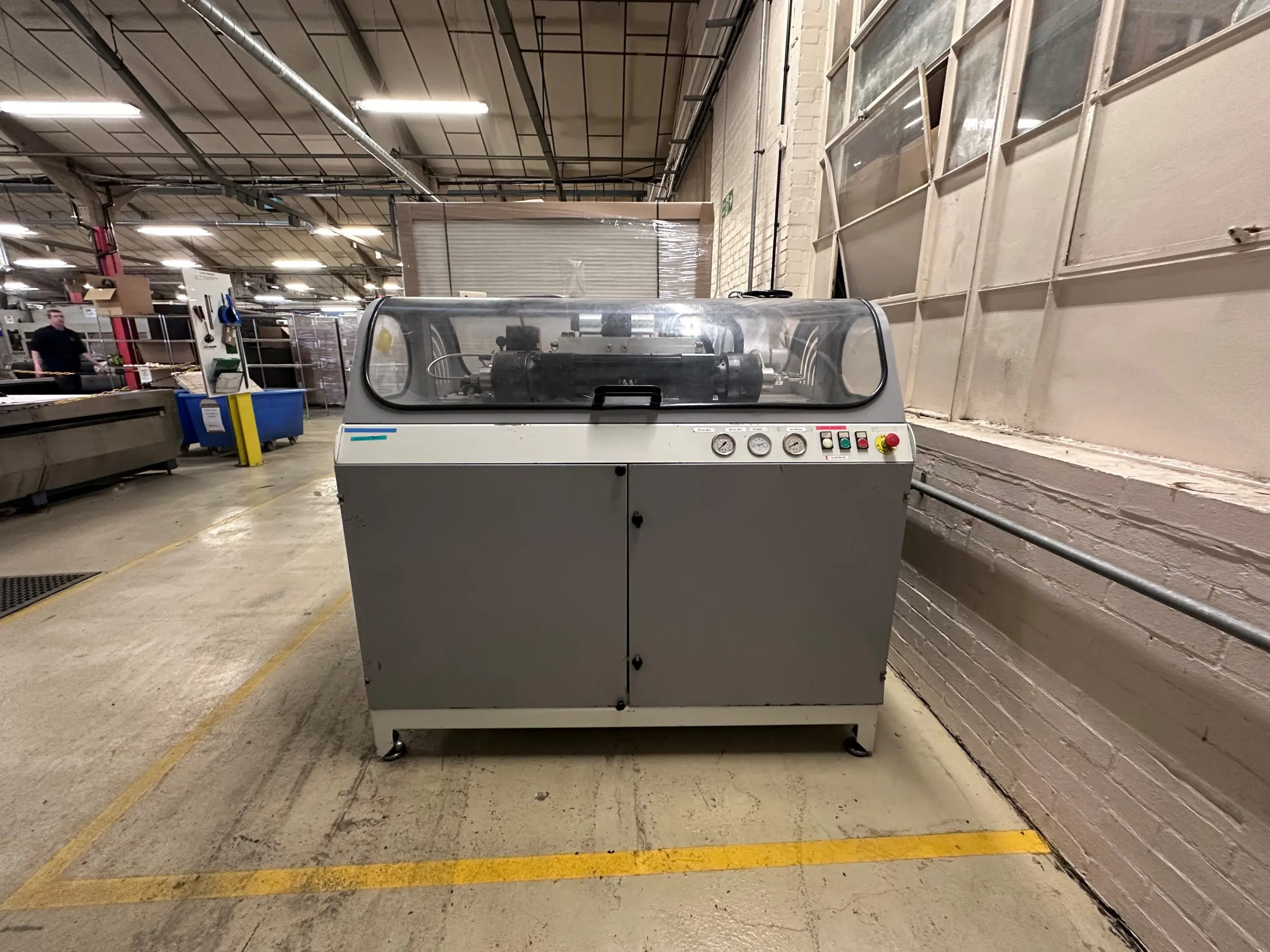
Technological Water Jet SX245 Digital Control High Pressure Pump
Read more >
When people think about foam, they often picture simple packaging. The reality however is that foam packaging inserts can be more complex than they first appear.
Designing effective foam components requires careful engineering. Material choice, density, structure and fabrication methods all influence how foam behaves under impact.
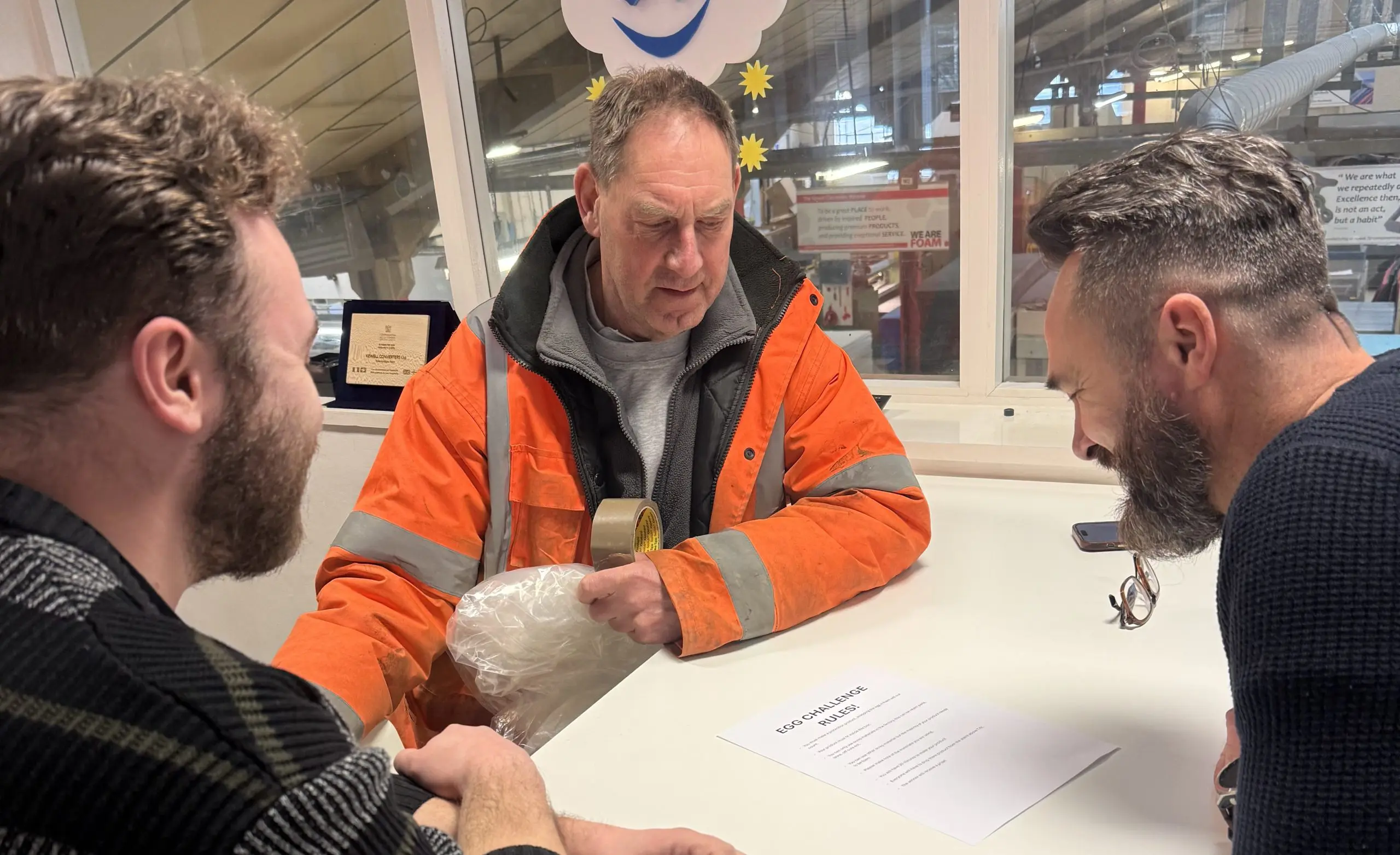
To mark World Creativity and Innovation Day, Kewell Converters set teams across the business a simple challenge:
Design a foam structure capable of protecting an egg dropped from height.
It sounds straightforward. But the thinking behind it reflects the same principles used when designing and moulding foam packaging components for industries such as aerospace, defence and advanced manufacturing.
Foam conversion is the process of transforming raw foam materials into engineered components such as:
Designing these foam components requires understanding how materials behave in real-world conditions.
Engineers must consider:
These same considerations shaped the egg protection challenge.
Teams were asked to design a foam structure capable of protecting an egg during a drop test from a first-floor height.
The objective wasn’t simply to stop the egg breaking. The design also needed to be efficient, lightweight and well thought through.
Teams were deliberately mixed across the business, combining office staff with production engineers. This created a balance between creative thinking and practical experience.
Before any materials were used, each team spent time discussing ideas and agreeing an approach. That early stage proved to be one of the most important.
The teams approached the challenge in different ways.
Some developed a clear concept quickly and moved straight into fabrication. Others took a more iterative approach, exploring different material options and refining their designs as they built.
This closely reflects how engineered components are developed in practice, moving from concept to prototype, then improving performance through testing and adjustment.
Most teams selected a combination of foam materials commonly used in protective applications:
Convoluted foam
Soft and compressible, ideal for absorbing impact energy.
Foam cord (tubing)
Used to create lightweight structural support.
Thin foam skins and offcuts
Flexible layers used to wrap and reinforce designs.
Double-sided adhesive (DSE)
Used to assemble layered structures.
A consistent finding across teams was that layering foam materials significantly improved performance.
Foam materials protect fragile components because of their cellular structure.
Inside foam are thousands of tiny air-filled cells. When an impact occurs, these cells compress and deform, spreading the force over a wider area and a slightly longer period of time.
This reduces the peak force transferred to the object being protected.
Engineers can control this behaviour by selecting different foam densities, structures and layering techniques depending on the level of protection required.
This is why foam is widely used in industries such as aerospace, electronics, healthcare and precision manufacturing.
As the challenge progressed, designs were tested by dropping them from height.
The winning team used a relatively simple approach: multiple layers of convoluted foam combined with additional structural reinforcement. The result was effective and reliable.
Other teams experimented with more complex concepts, including parachute-style designs. When these elements were removed to increase the difficulty of the test, performance depended entirely on the core structure.
Not all designs succeeded.
But each test provided valuable insight into how foam materials behave under impact.
Despite the simplicity of the challenge, several engineering lessons emerged:
One team also completed the challenge with only two members. This demonstrated how clear roles and teamwork can influence performance.
Challenges like this highlight the thinking behind engineered foam products.
Designing protective components is not just about selecting a material. It involves understanding behaviour, testing ideas and refining solutions through iteration.
The same principles apply whether protecting a fragile object, designing an aerospace component or developing packaging for sensitive equipment.
The egg challenge showed that innovation doesn’t always begin with complex systems or advanced tools.
Sometimes it starts with a simple question and a willingness to test ideas.
At Kewell Converters, that mindset underpins how engineering problems are approached every day.
Because behind every successful foam component is the same process:
Understand the problem.
Test the idea.
Refine the solution.
Nick Kewell is Managing Director of Kewell Converters, a UK-based foam conversion specialist with more than 50 years of experience in designing and manufacturing engineered foam components for demanding applications.
14th September 2026
Read more >
14th September 2026
Read more >
14th September 2026
Read more >