3rd August 2026
From concept to production: how bespoke foam components are engineered
Read more >
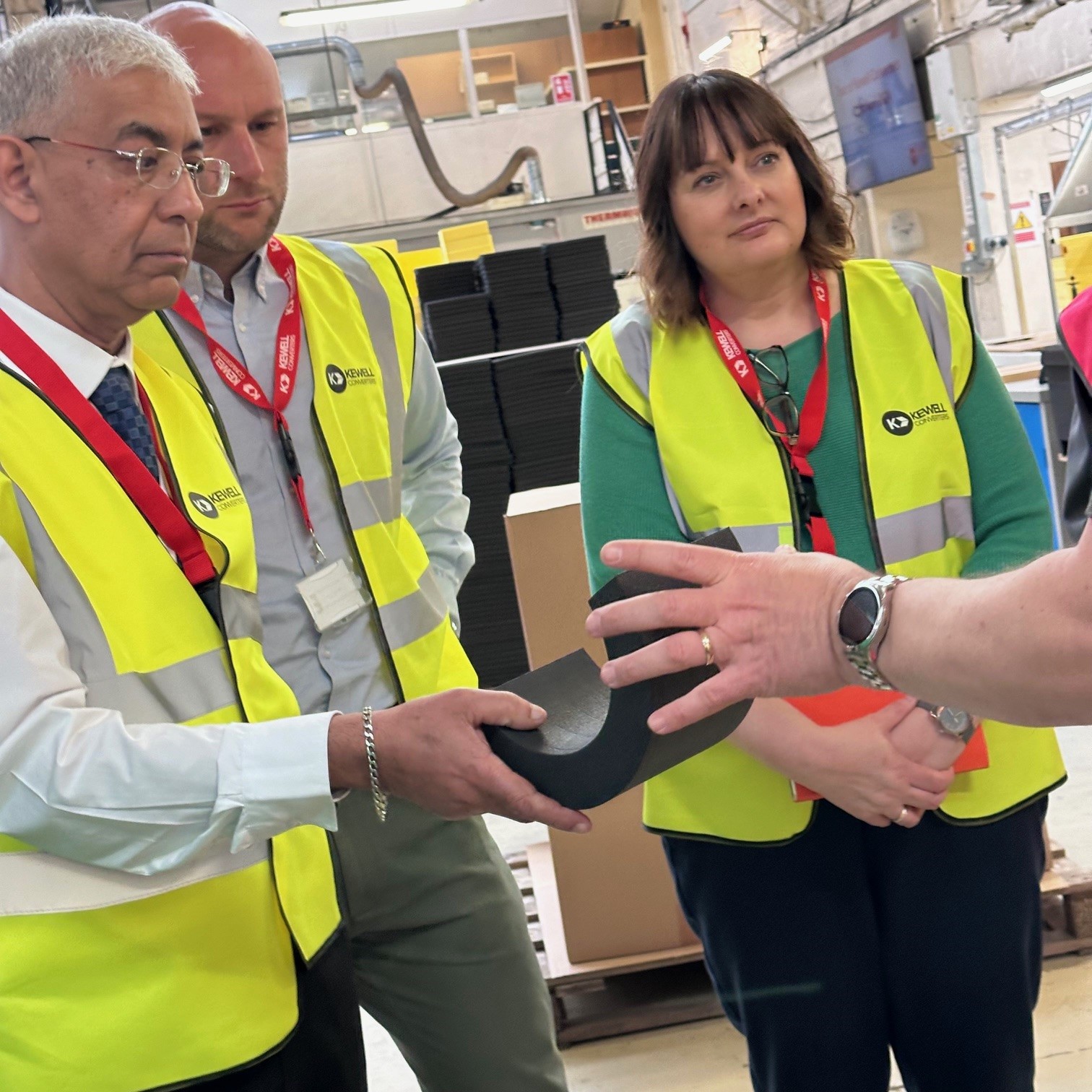
Choosing a foam supplier used to be straightforward: compare price, check lead time, place the order. Today, it’s very different. Supply chains are tighter, compliance requirements are stricter, and the cost of failure is far higher, especially in sectors such as defence, aerospace and advanced manufacturing.
For procurement teams, quality managers and engineers, the decision now carries real operational risk. The wrong supplier can delay production, compromise performance, or create additional work managing multiple vendors. The right supplier is one that combines consistent quality, technical expertise and reliable delivery. Choosing based on price alone can increase risk, while the right partner helps improve performance, reduce delays and support long-term production stability.
This guide is designed to help buyers make a better decision, and to highlight what truly matters when selecting a foam conversion partner.
Most supply chain issues don’t come from a lack of suppliers, but from working with the wrong ones.
Across many industries, supply chains are under pressure. Material availability can change quickly, compliance standards continue to evolve, and projects increasingly depend on reliable partners who can deliver consistently.
Customers are also looking to simplify operations. Many businesses are moving towards fewer, more strategic supplier relationships. In a recent conversation, a customer explained that they were managing seven suppliers for the same material and had made supplier consolidation a priority to improve reliability, communication and overall efficiency.
This reflects a broader shift: supplier choice is no longer just about cost, it’s about risk, reliability and long-term performance.
Recent global events have reinforced how exposed supply chains can be. Disruption to energy and petrochemical routes, particularly through the Strait of Hormuz, has led to rising costs and increased volatility across manufacturing supply chains.
For foam materials, which rely on petrochemical inputs, this can affect availability, pricing and lead times. As a result, supplier choice is increasingly a risk management decision, not just a commercial one.
It’s natural to focus on price and lead time. These are easy to measure and often the first metrics discussed in procurement conversations.
But they rarely tell the full story.
A supplier may offer a lower unit price, yet lack the technical expertise to deliver consistent results, particularly when working with complex materials. Small variations in cutting, bonding or material handling can affect performance, durability and safety.
Quality and technical capability often matter more over time. In one of our long-standing customer relationships, quality and technical expertise were rated 5 out of 5, reinforcing that reliability and performance often matter more than the lowest price.
That’s a useful reminder: the cheapest option isn’t always the most cost-effective.
The strongest suppliers share a few consistent characteristics. They deliver reliably, communicate clearly and contribute technical insight from the earliest stages of a project.
As Nick Kewell, Managing Director, often says: “The right supplier doesn’t just deliver parts, they help you avoid problems before they happen.”
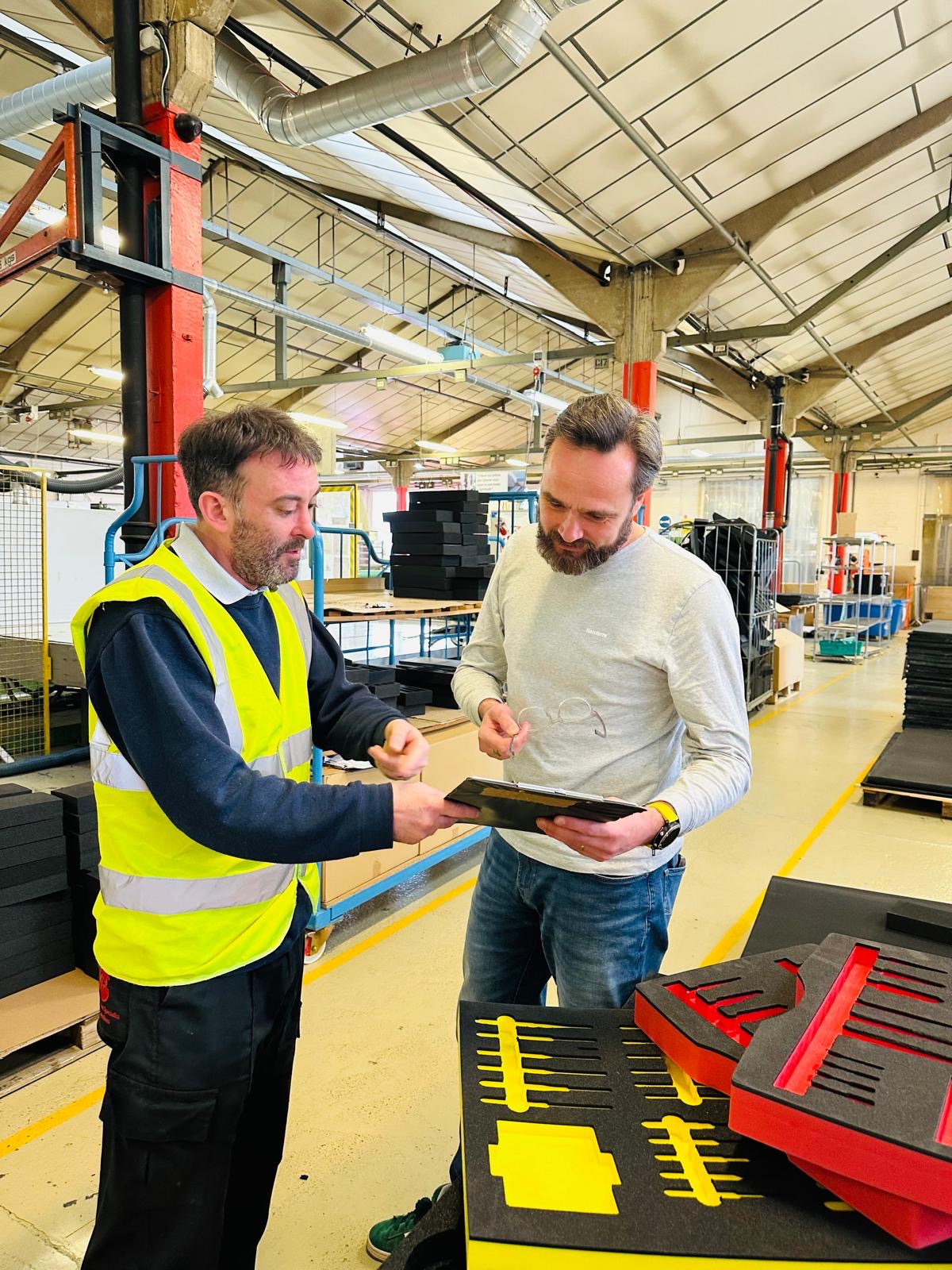
Reliable production matters more than speed alone. Whether producing bespoke military foam and packaging, foam inserts for Euro containers, or high-performance foams for aviation systems, consistency protects both product performance and production schedules.
This is supported by in-house quality expertise, ensuring materials and processes are validated before production begins.
A good supplier doesn’t just manufacture parts, they help improve them. That may involve suggesting alternative materials, refining tolerances, or recommending more efficient production methods.
Some customers now expect suppliers to move beyond a reactive role and actively propose cost-saving or performance improvements.
Clear communication and fast problem resolution build trust. In one case, a customer highlighted responsiveness as a key strength, noting that issues were resolved quickly and communication remained reliable throughout the process.
These factors often determine whether a supplier becomes a long-term partner or just another vendor.
Focusing solely on price can lead to hidden costs, including delays, rework or inconsistent performance.
Managing multiple vendors increases complexity, administrative time and risk. Consolidating suppliers can improve efficiency and accountability.
Foam suppliers who simply respond to orders may struggle to support growth, new product development or changing requirements.
Proactive suppliers, by contrast, help anticipate challenges, from material availability to design optimisation, before they affect production.
These questions can help reveal whether a supplier is capable of supporting your operation long term:
● How do you manage material availability and lead times?
● Can you provide full traceability and certification documentation?
● What technical support is available during design and development?
● How do you respond to urgent delivery requirements?
● Can you scale production if demand increases?
● Do you offer guidance on material selection or performance improvements?
● What sustainability and compliance support can you provide?
These conversations often reveal far more than a price list.
Modern applications, from protective foam for defence equipment to thermal and chemical resistance foams, demand precision, reliability and technical understanding.
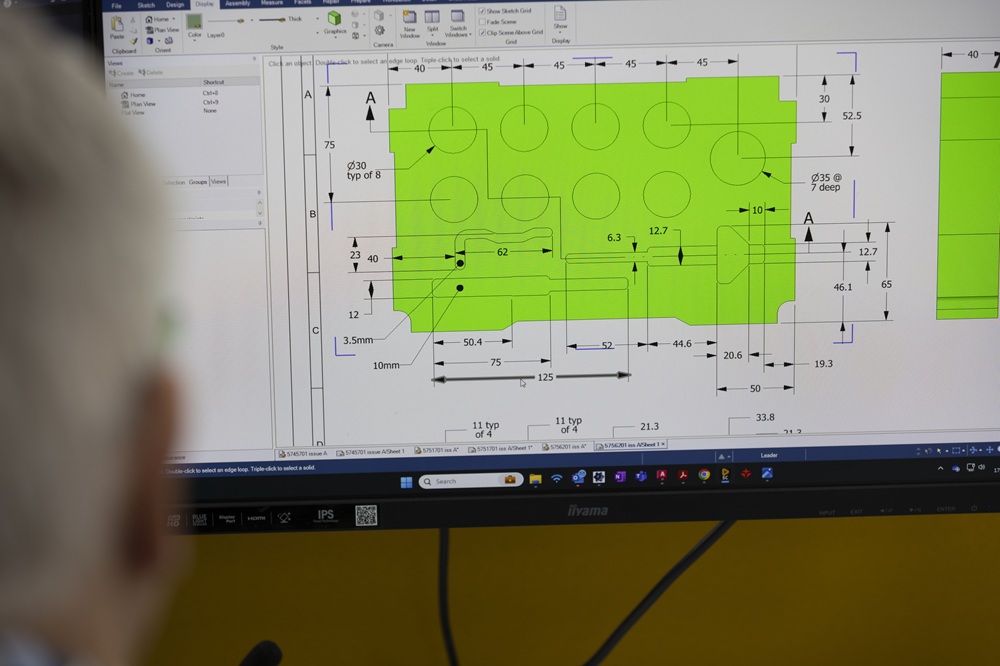
That’s why many organisations now look for suppliers who can support the entire process, from material sourcing and CAD design to manufacturing and delivery.
By managing more of the supply chain, a capable partner reduces complexity for customers, allowing them to focus on production and performance rather than coordination.
In summary: The most important factors when choosing a supplier are:
· Consistent quality and reliable delivery
· Technical expertise and proactive input
· Clear communication and responsiveness
· Ability to scale and support long-term requirements
These factors often have a greater impact on performance and cost than price alone.
Selecting the right foam supplier is ultimately about reducing risk and improving performance.
Price and lead time will always matter. But reliability, technical expertise and responsiveness are what protect your production schedules, and your reputation.
The best suppliers don’t simply deliver components. They help you build more reliable, better-performing products.
If you’re reviewing your supplier base, or planning a new project, it’s worth taking a step back to assess whether your current approach is delivering the reliability and performance you need.
Speak directly with an engineer at Kewell Converters to discuss your requirements, whether that’s bespoke military foam, precision foam inserts, or high-performance engineered foam products.
No obligation. Just practical advice.
Nick Kewell is an engineer and the Managing Director of Kewell Converters, a UK-based foam conversion specialist with more than 50 years’ heritage in delivering engineered solutions for defence, aerospace and industrial applications. Under his leadership, Kewell Converters continues to invest in advanced manufacturing technologies, materials expertise and customer partnerships.