10th September 2026
What does sustainable foam manufacturing really mean?
Read more >
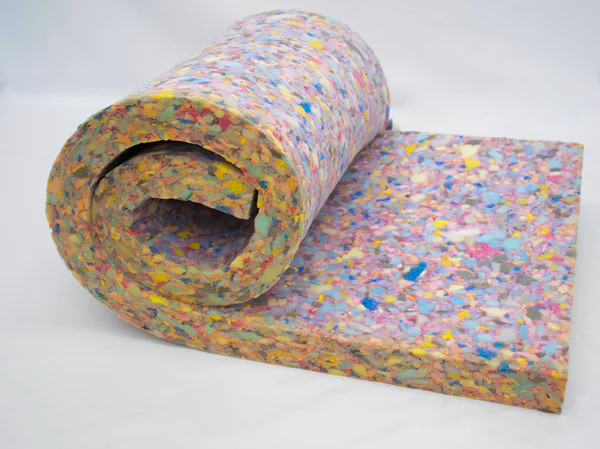
Sustainable foam manufacturing isn’t simply about replacing a conventional foam with a recycled or bio-based alternative. It means considering the environmental impact of the material, component design, manufacturing process, supply chain, working life and end-of-life route together.
For engineers and procurement teams, the most sustainable option is therefore not always the material with the strongest environmental claim. It’s the solution that meets the required performance for as long as necessary, uses resources efficiently and avoids unnecessary waste, replacement or redesign.
Sustainable foam manufacturing aims to reduce environmental impact while maintaining the technical performance, quality and consistency required by the application.
In practice, this can include:
This reflects the UK waste hierarchy, which places waste prevention above reuse, recycling, recovery and disposal. In other words, the first question should be how to avoid creating unnecessary waste, not only what to do with it afterwards.
No. Recycled content is an important consideration, but it shouldn’t be assessed in isolation.
A recycled or lower-impact material must still meet the component’s functional requirements. Depending on the application, these may include compression resistance, impact absorption, thermal performance, chemical or moisture resistance, flammability performance, weight restrictions, dimensional tolerances or specific regulatory requirements.
If an alternative material deteriorates too quickly, causes the component to fail or requires frequent replacement, its overall environmental impact may be greater than that of a more durable conventional material.
This is particularly important in safety-led and mission-critical applications. Foam used in protective defence packaging, aerospace applications or medical equipment can’t be selected on environmental credentials alone. Performance, compliance and service life remain essential.
The right approach is to define what the component needs to do and then compare viable materials against technical, commercial and environmental criteria. Read our guide to choosing the right foam material.
One of the biggest opportunities to improve sustainability can arise before production even begins.
A design may contain unnecessary thickness, very tight tolerances or closely spaced features that make it difficult to position efficiently on a foam sheet or block. Relatively small design changes can sometimes allow more components to be produced from the same amount of material.
Design optimisation might involve:
The objective isn’t simply to make the part smaller. It’s to achieve the required performance while minimising unnecessary material and processing.
Manufacturing method also matters
CNC routing may be appropriate for complex components or smaller development batches, while die cutting can provide an efficient and repeatable solution for some higher-volume components. Other designs may be better suited to waterjet cutting, contour cutting, moulding or lamination.
Programming, tooling, cutting paths and component orientation can also influence cycle time, energy use and material yield.
Considering these factors at the design stage can therefore influence both the commercial and environmental efficiency of the finished component.
Some foam waste is unavoidable, particularly where components contain pockets, curved profiles or complex internal features.
The next question is whether that material can be separated and directed towards a useful recovery route.
Depending on the foam, its condition and the recovery routes available, offcuts may be:
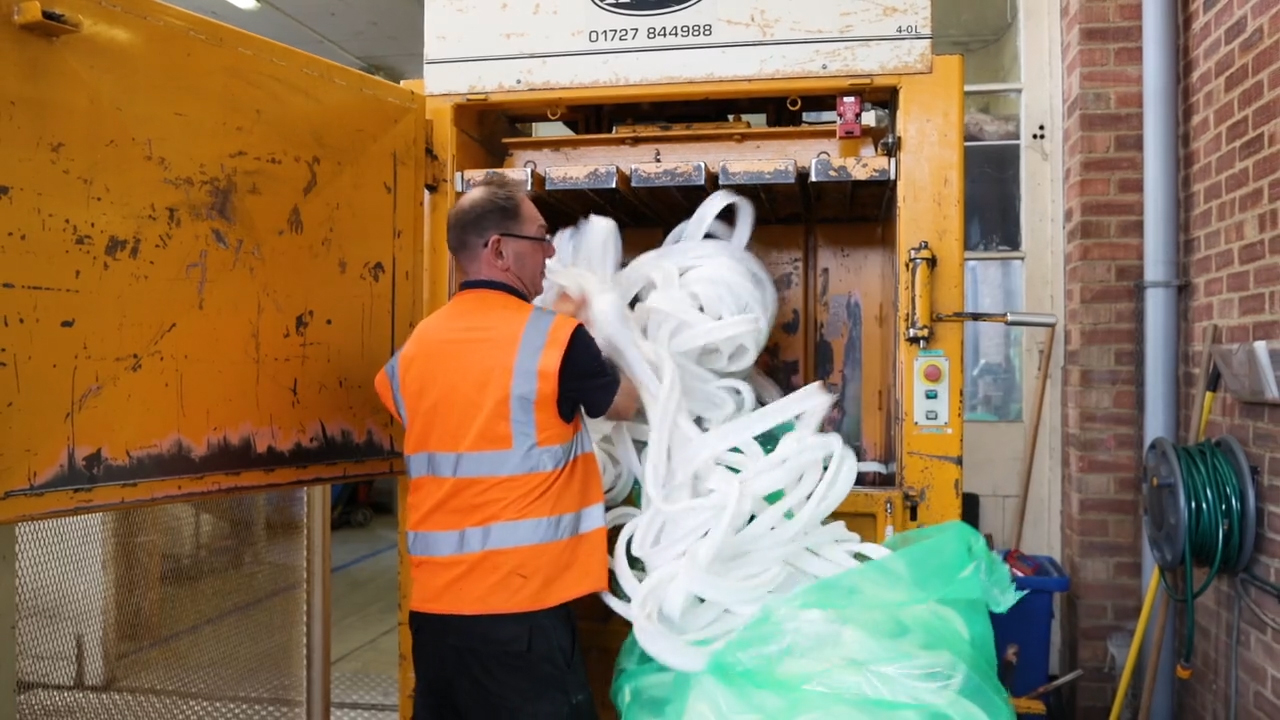
At Kewell Converters, suitable foam scraps and residues, including EVA and closed-cell polyethylene foam, are segregated and compacted before being sent to recycling or upcycling projects.
However, recycling shouldn’t be treated as evidence that all foam is automatically circular. Some grades, bonded assemblies and contaminated materials can be difficult to separate or reprocess, and recovery routes vary according to material, location and volume.
Clear material identification and realistic end-of-life planning are therefore more useful than simply describing a component as “recyclable”.
Sustainability extends beyond the foam component itself to the energy used during manufacture and the wider supply chain.
Kewell Converters has installed 200 solar panels at its Kent factory, generating approximately 20% of the company’s electricity and estimated to reduce greenhouse gas emissions by 26 tonnes per year.
Other measures across a manufacturing operation can include improving energy efficiency, reducing unnecessary processing and reviewing how materials and finished components travel through the supply chain.
Local and UK-based sourcing can reduce transport distances and improve supply-chain visibility where an appropriate material is available. But proximity alone doesn’t make a material or supplier more sustainable. Technical suitability, certification, consistency, traceability and continuity of supply all need to be considered alongside transport and environmental impact.
Kewell Converters’ ISO 14001:2015 environmental management system provides a structured framework for monitoring environmental performance, managing waste and resource use and supporting continual improvement.
Find out more about our approach to sustainability
A circular economy aims to retain the value of products and materials for as long as possible through durability, reuse, repair, refurbishment and recycling.
For engineered foam components, this might mean:
Full closed-loop recycling isn’t yet practical for every technical foam. That makes durability and resource efficiency particularly important.
It’s also important to consider what a foam component enables during its working life. For example, a protective foam insert that prevents repeated damage to a high-value component may provide an environmental benefit even where the foam itself has limited recycling options. Similarly, a lightweight component may help reduce the overall weight of an assembly or transported package.
The environmental impact therefore needs to be considered in the context of what the foam enables, protects or replaces.
Rather than simply asking whether a foam is “eco-friendly”, consider:
These questions create a much more useful conversation about sustainability than focusing on a single material characteristic.
The environmental impact of a foam component is shaped by a series of connected decisions: what the part needs to do, which material is selected, how it is designed, how efficiently it is manufactured and what happens during and after its working life.
Recycled and lower-impact materials have an important role to play, but they’re only part of the answer.
Reducing waste at source, improving durability, using resources efficiently and making informed engineering decisions can be equally important.
For engineers and procurement teams, the practical objective is to find the right balance between environmental impact, performance, compliance, cost and supply-chain resilience.
If you’re developing a new engineered foam component or reviewing an existing design, Kewell Converters can help assess the material, geometry and manufacturing method to identify practical opportunities to reduce waste and improve production efficiency.
Send us a drawing, sample or initial specification to discuss your requirements.
Nick Kewell is Managing Director of Kewell Converters, a family-owned British specialist foam converter with more than 50 years’ experience helping manufacturers solve complex foam engineering challenges.